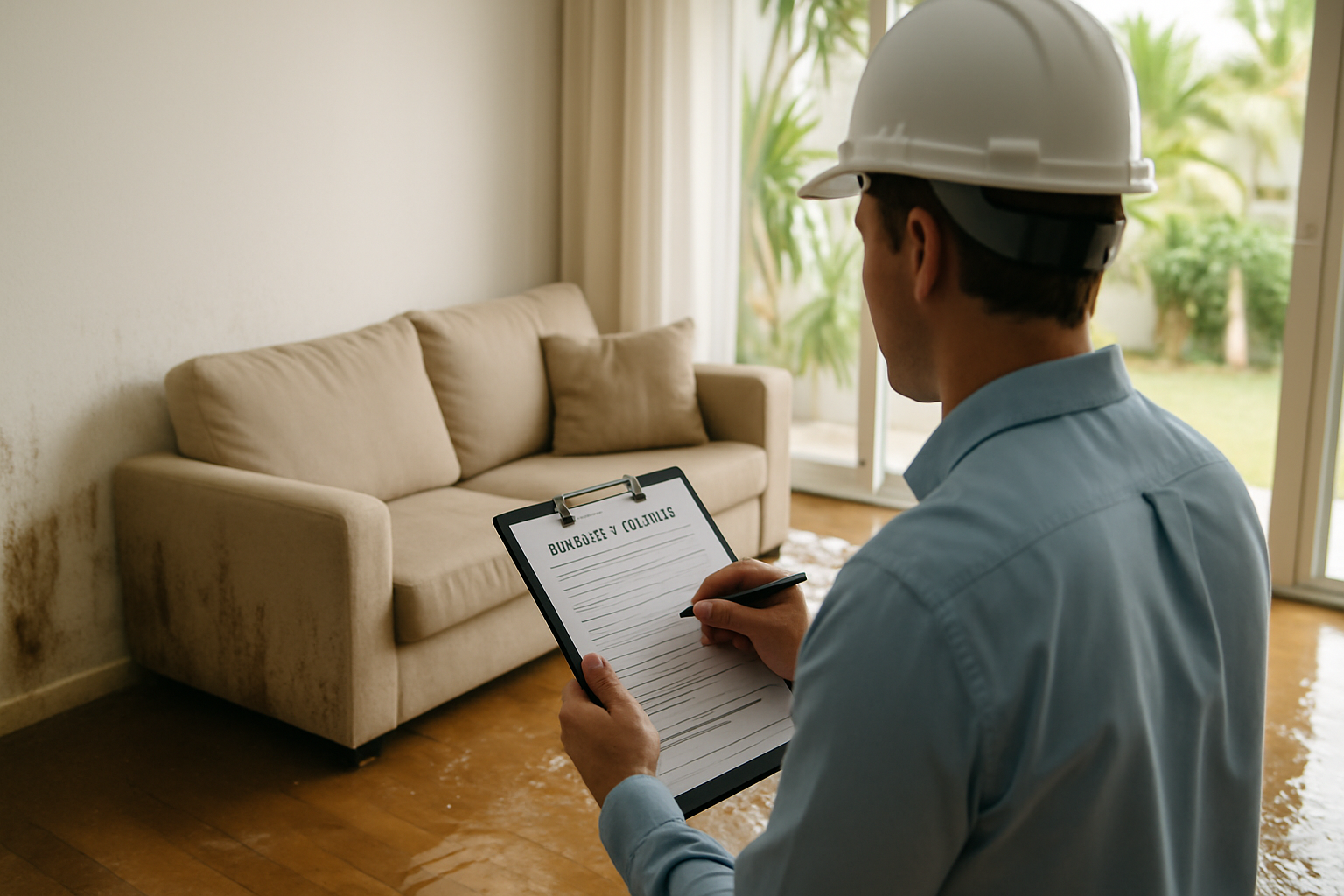
How long do you actually have to file? Most Honolulu homeowners have heard they get about a year. That is roughly true, and it is also the answer that gets claims denied. Two separate clocks run after water damage, and the short one is the one that matters. Knowing the difference between them is worth more than any other step on a claim checklist.
Key Takeaways
- ›Two deadlines run at once: your policy expects notice in days, while the legal window to file runs far longer.
- ›Many policies cap water damage payouts near $10,000 even when dwelling coverage is much higher.
- ›Flooding from rising water or storm surge is never covered by a standard policy. That needs separate flood insurance.
The Two Deadlines That Decide Your Claim
This is where most claims go wrong, and almost no checklist separates the two.
The Prompt Notice Clock
Nearly every policy contains a prompt notice clause. It expects you to report a loss as soon as reasonably possible. In practice that means 24 to 48 hours, and rarely more than 10 to 14 days.
Miss it and the insurer has an argument. They can reclassify sudden damage as a slow leak, wear and tear, or neglect. None of those are covered. Because mold and rot begin within a couple of days here, a late report also lets them deny the secondary damage.
The Hawaii Filing Window
Separately, Hawaii generally allows about a one-year period to file a property damage claim. That is the outer legal boundary for completing the claim.
The trap is treating the long clock as the real one. Reporting late still breaches prompt notice, even inside that year. Report within days. Complete the paperwork at a sane pace after that.
What Your Policy Actually Covers in Hawaii
Before a claim, read the exclusions page. It is short, and it decides everything.
Sudden and Accidental Versus Gradual
Policies pay for sudden, accidental water damage. A burst pipe inside a wall qualifies. So does a ruptured water heater or a snapped washing machine hose.
They deny gradual damage. A shower pan that leaked for months is maintenance, not an event. One more detail catches people out. Insurance pays for the damage the water caused. It does not pay to replace the pipe or appliance that failed.
Flood Is a Separate Policy
Rising water, storm surge, and overflowing streams are excluded from every standard homeowners policy. On Oahu that gap matters more than on the mainland.
Flood coverage comes through the National Flood Insurance Program or a private flood policy. If you have NFIP coverage, the NFIP explains how to start a flood claim. It notes a claim can take four to eight weeks to finalize and pay. Sewer and drain backup is excluded too, and needs its own endorsement.
The Sub-Limit Most Homeowners Never Read
Here is the line that surprises people with a well-insured home. Many policies now carry a water damage sub-limit, often around $10,000.
A sub-limit caps water claims regardless of your dwelling coverage. A home insured for $700,000 can still see water payouts stop at the sub-limit. Find that number in your declarations page today, not while a crew is pulling out drywall.
Before You File, Check Whether It Is Worth It
Not every loss belongs on a claim, and filing carries a cost beyond the deductible.
Claims go on your CLUE record, which follows the property rather than you. A water claim can raise future premiums. Repeat claims can lead to non-renewal. In a Honolulu market where coverage is already tight, that risk is real.
Run the math first. If repairs cost $3,000 and your deductible is $1,000, you are claiming $2,000. You are also accepting a mark on the property's record to get it.
Hawaii's own consumer guidance points the same way. The Insurance Division suggests discussing damage at or near your deductible with your agent before filing anything.
Filing clearly makes sense when the event was sudden and several rooms are affected. It also makes sense when drying and rebuild costs run well past the deductible.
The First 48 Hours, In Order
Order matters more than speed alone. Doing step four before step two costs people money.
- Stop the water. Shut the main valve or kill the source. Safety first if power is involved.
- Photograph everything before you touch it. Wide shots of each room, then close-ups of wet materials and damaged contents.
- Call your insurer and get a claim number. Ask directly what documentation they need and by when.
- Mitigate, because your policy requires it. Extract standing water and get air moving. Leaving it to worsen can reduce what you recover.
- Keep the damaged items. Do not throw out ruined furniture or flooring until the adjuster has seen it.
- Keep every receipt. Drying equipment, a hotel night, a plumber's call-out. Document the spend as you go.
Photograph the room again once mitigation starts. Showing both the damage and your response supports a claim well. When Hawaii Water Damage Restoration works a Honolulu loss, those readings and photos go into the file from visit one.
When the Claim Stalls
Most guides end at "submit and wait." That leaves out the part Hawaii homeowners can actually use.
The Hawaii Insurance Division regulates carriers in the state and helps consumers directly. Their storm claims line and claim resources exist for exactly this situation. Call 1-844-808-DCCA and press 4 for storm losses. The Division also offers free consumer assistance for questions or problems with a claim.
Use it when a claim goes quiet or an estimate lands far below repair reality. Use it when a denial does not match your policy language. An NFIP denial can also be appealed to FEMA.
Frequently Asked Questions
1.Should I file a claim for water damage?
2.How much does insurance pay for water damage?
3.What is not covered by homeowners insurance?
4.Does the insurer pay for drying and equipment?
5.Can I choose my own restoration company in Hawaii?
Start the Claim, Then Start the Drying
A water damage insurance claim Hawaii homeowners win is usually the one documented in the first two days. Report inside the prompt notice window, photograph before cleanup, and read your sub-limit before you need it. If you want the general process end to end, our guide to filing an insurance claim for water damage walks through it.
When water is still in the house, both clocks are running. Hawaii Water Damage Restoration documents moisture readings and drying logs from the first visit, which is exactly what adjusters ask for later. Our water and flood damage crews work across Honolulu and the rest of Oahu.
Every policy differs, so read yours and ask your agent about your own coverage. Handled early, a water damage insurance claim Hawaii carriers approve is mostly a documentation exercise.