Water just hit your Hawaii home — plumbing failure, roof leak in the last Kona storm, or AC condensate flood. Now you’re looking at wet drywall in a climate where outdoor humidity rarely drops below 60%. The next question every Oahu homeowner asks: can this be dried in place or does it all need to come out?
This guide walks through the repair vs replace decision tree for water-damaged drywall in Hawaiian climate — the 12-hour rule, the humidity factor that complicates everything, and the mold-risk realities Oahu and outer-island homeowners face.
Key Takeaways
- ›Hawaii’s high ambient humidity (60-80% year-round) shortens the in-place drying window significantly compared to dry-climate markets.
- Drywall wet less than 12 hours MAY be dried in place; beyond 12 hours, replacement is almost always required in Hawaiian humidity.
- Mold growth begins within 24-48 hours in Hawaii — faster than mainland markets — so timing matters more here than anywhere else.
Why Hawaii Is Different
Mainland drying protocols assume outdoor humidity averaging 30-50%. In Hawaii, outdoor humidity routinely runs 60-80% year-round, and indoor humidity in unconditioned spaces matches it. This matters because drying drywall requires creating a humidity gradient — moving moisture from wet material into drier air. When outdoor air is nearly as wet as wet drywall, drying takes longer, requires more equipment, and often doesn’t reach IICRC moisture targets even after extended runtime.
Translation: the 12-hour rule that applies in dry climates becomes a 6-8 hour rule in Hawaii. Past that window, paper-faced drywall has usually absorbed enough moisture that mold has already begun establishing inside the layered paper face — replacement becomes the safer call.
When You Can Repair (Dry In Place)
- Wet less than 6-8 hours in Hawaiian climate
- Surface damage only — water staining without structural change
- Drywall still firm when pressed firmly
- No visible swelling, bulging, or sagging
- Small contained area (single wall section, under 6 sqft)
- Source of water is identified, stopped, and was clean (Cat 1)
- Commercial drying equipment available and deployed within hours
- Professional moisture meter confirms drying targets within 48 hours
When Replacement Is the Right Call
- Wet more than 8 hours (the most common Hawaii scenario)
- Visible warping, bulging, sagging, or deformation
- Soft spots when pressed firmly
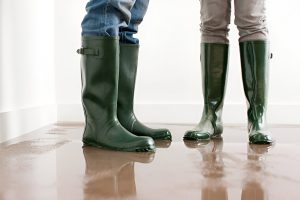
- Drywall below visible water line on flood-affected walls
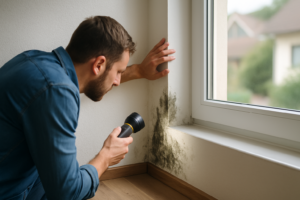
- Mold visible OR musty smell present
- Multiple walls or ceilings affected
- Cat 2 (gray water) or Cat 3 (sewage) water source
The Mold Risk in Hawaiian Climate
Mold spores are everywhere — in Hawaii they’re particularly abundant because the climate supports continuous growth in natural environments. Once wet drywall provides a substrate (cellulose paper face + moisture above 60%), mold colonization begins within 24-48 hours, faster than mainland averages of 48-72 hours. Restoration done at mainland speeds in Hawaii frequently leads to mold appearing 2-4 months later behind ‘dried’ walls.
What this means: when in doubt in Hawaii, cut it out. The cost of replacement is far lower than the cost of mold remediation 6 months later, including drywall removal, mold treatment, content cleaning, and potential health impacts.
Structural Tests Pros Use
Moisture Meter Reading
Pin or pinless meters measure water content directly. Drywall above 1.0% moisture content supports mold growth; IICRC target for ‘dry’ is 0.7% or lower. In Hawaiian humidity, achieving 0.7% target consistently requires aggressive dehumidification (typically two 90-150 pint commercial dehumidifiers per affected room) for 48-72 hours minimum.
Thermal Imaging
Infrared cameras show temperature differences — wet materials are cooler than dry. Pros use thermal imaging to find moisture behind paint and identify the actual extent of saturation. In Hawaii, hidden moisture often spreads 2-4x larger than visible water staining suggests because Hawaiian wall assemblies (often single-wythe CMU or wood-frame with limited cavity drying) trap moisture differently than mainland construction.
Cavity Inspection
Pros remove outlet covers, switch plates, or small inspection holes to check insulation and framing. Saturated insulation in Hawaiian humidity rarely dries adequately; replacement is usually required even when drywall might be salvageable.
Cost Comparison: Repair vs Replace
- Dry-in-place restoration: $300-$800 per wall section (commercial equipment, monitoring — costs higher in Hawaii due to longer runtimes)
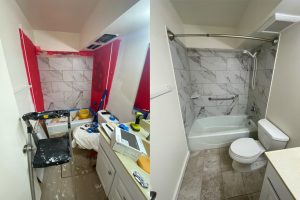
- Cut, replace, and finish drywall: $500-$1,500 per wall section (material, taping, mudding, sanding, priming, painting)
- Full ceiling replacement: $1,000-$3,000 (more labor for overhead work and texture matching)
- Add-on cost: Hawaii drywall material costs 30-50% higher than mainland due to shipping
- Insurance typically covers either path when source is a covered event
Hawaii-Specific Restoration Considerations
Oahu and outer-island homes have construction characteristics that affect restoration scope. Many homes use single-wythe CMU walls or wood-frame with limited cavity insulation — different moisture behavior than mainland 2×4 cavity walls. Older Honolulu, Kailua, and Kaneohe homes often have lath-and-plaster instead of drywall — restoration approach differs. Salt-spray exposure on windward-side homes adds corrosion considerations to any electrical work uncovered during restoration. AC condensate failures are a major hidden water source in HVAC-equipped Hawaii homes.
Can drywall be dried with fans alone in Hawaii?
Almost never effectively. Consumer fans don’t create the humidity gradient required to dry materials in Hawaii’s already-humid air. You need commercial dehumidifiers (90-150 pint) plus high-velocity air movers, sized to the affected square footage. Even with proper equipment, drying times in Hawaii run 1.5-2x longer than mainland averages.
How long does drywall take to dry after water damage in Hawaii?
With commercial equipment: 48-72 hours to reach IICRC targets when caught early. With consumer fans: usually never reaches targets — surface dries while interior stays wet and mold establishes. Scenarios where moisture has been present 24+ hours rarely respond to drying — replacement is typically required.
Will mold grow in ‘dried’ drywall in Hawaii?
Often yes if drying didn’t reach IICRC moisture content targets (below 0.7%) and didn’t address the underlying water source. Hawaii’s persistent humidity means even small remaining moisture levels support continued mold growth. Properly dried drywall with source fixed rarely develops mold; partial drying almost always does, often within 60-90 days.
Can I cut wet drywall myself in Hawaii?
Small contained Cat 1 (clean water) sections under 4 sqft are reasonable DIY for handy homeowners. Anything larger, contaminated water, structural concerns, or mold visible needs professional removal with proper containment. Hawaii’s mold spore load makes amateur removal especially risky — improperly cut contaminated drywall releases spores throughout your home.
Got Wet Drywall in Your Hawaii Home?
Hawaii’s climate compresses the decision window. The cost of acting fast (within hours, not days) is dramatically lower than the cost of mold remediation 60 days later.
Schedule a professional assessment with our Water & Flood Damage Restoration in Honolulu team — moisture meters, thermal imaging, and the equipment Hawaii’s climate actually requires. IICRC-certified across Oahu, including same-day response on water emergencies before mold has a chance to establish.