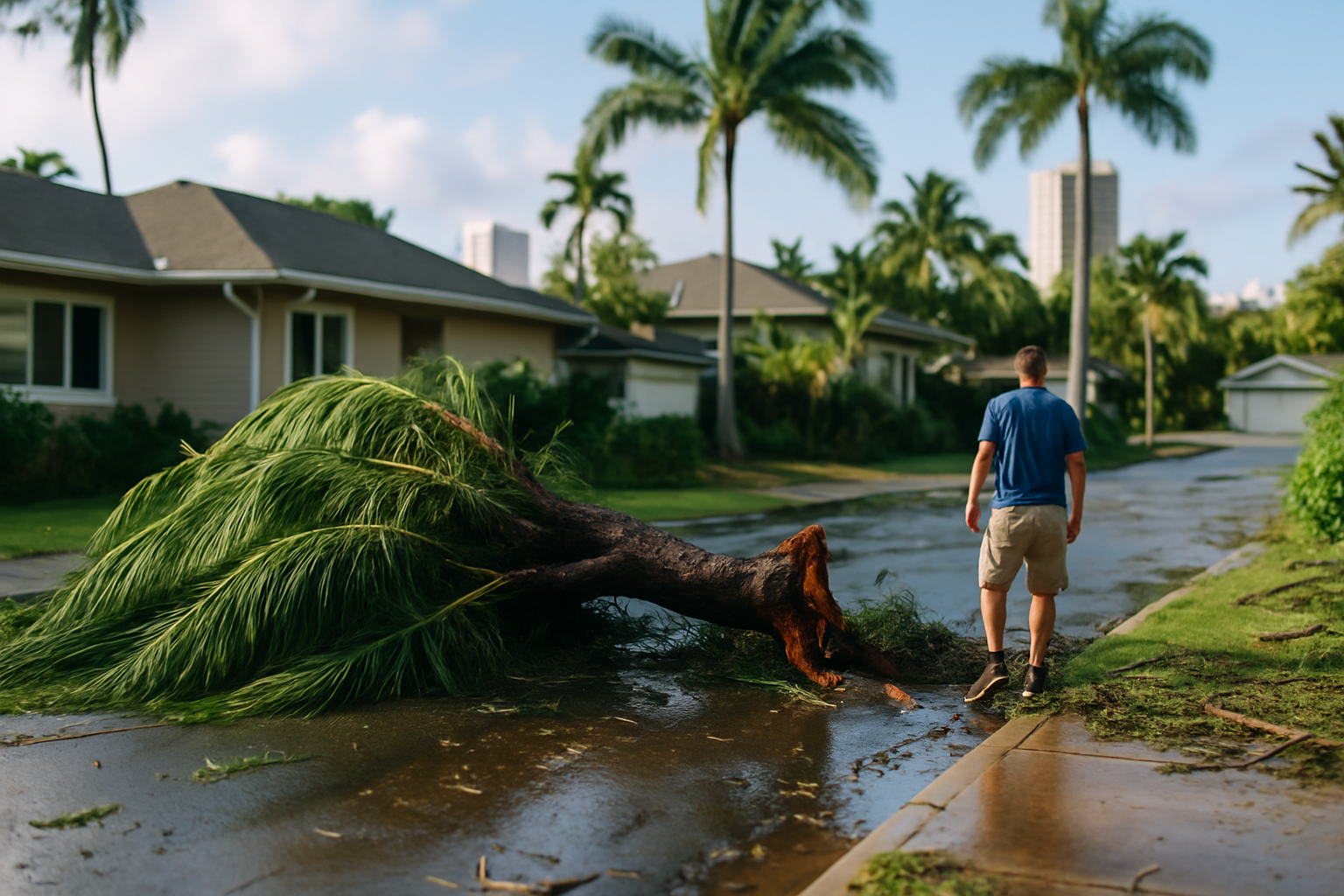
The wind drops, the rain eases, and the temptation is to start cleaning up. Hold off for a moment. What you do in the next two days decides how much a claim will cover. It also decides how fast the drying starts. Most of the costly mistakes after a storm are not dramatic. They are a photo not taken, a receipt thrown away, or a wet wall left closed up for a week.
Key Takeaways
- ›Document everything before you clean. Photos taken after cleanup are far weaker evidence.
- ›Do not start permanent repairs until the adjuster has seen the property. Temporary protection is expected and encouraged.
- ›File a county damage report as well as an insurance claim. The two are separate, and the county one is easy to miss.
Hours 0 to 6: Make It Safe, Then Look
Nothing else on this list matters until the house is safe to be in.
Hazards First
Stay clear of downed power lines and anything metal touching them. Report them rather than moving them. Avoid standing water where wires or outlets could be submerged, and leave immediately if you smell gas.
If any part of the structure looks unstable, do not go back in. Sagging ceilings, bowed walls and shifted framing are reasons to wait for an inspection.
Dress For It
This sounds minor and is not. The National Weather Service advises wearing long pants, a long-sleeved shirt and sturdy shoes when walking through storm damage. Debris fields across Honolulu after a system are full of broken glass, roofing fasteners and splintered wood.
Keep listening to local radio or NOAA Weather Radio while you work. In Hawaii a second band of weather often follows the first.
Hours 0 to 12: Document Before You Touch Anything
This is the step people rush, and it is the one insurers lean on hardest.
Walk every room, including the ones that look fine. Water travels, and a ceiling two rooms away can be wet before it shows. Shoot wide shots that establish the whole room, then close-ups of specific damage.
Photograph the outside from every side of the house. Capture the roof from ground level, the gutters, and any fence or lanai damage. Timestamped video narrating what you see works well alongside stills.
Do this before you move a single item. If you must move something to prevent further harm, photograph it where it landed first.
Hours 6 to 24: Stop the Damage Getting Worse
Your policy expects you to limit further loss. This is called mitigation and it is your responsibility, not the insurer's.
- Tarp damaged roof sections and cover broken windows with sheeting or boards.
- Shut off water supply to any failed line or fixture.
- Remove standing water with a wet/dry vacuum where it is safe to do so.
- Move undamaged valuables and electronics out of wet rooms.
- Get air moving and start drying, especially in this climate.
Keep every receipt. Tarps, plywood, a generator, a hotel night, a plumber's call-out. Those are usually recoverable, but only with paperwork.
One limit matters here. Temporary protection is expected. Permanent repairs are not, and starting them before the adjuster visits can cost you part of the claim.
Salt Water Is Not Rain Water
On the south shore, tropical storm damage Honolulu homes take often arrives as surge rather than rainfall. Ala Moana and the coastal stretches see sand, debris and seawater pushed inland.
Salt behaves differently. It stays in materials after the water leaves, holds moisture, and keeps corroding metal and fixings. If seawater entered your home, say so explicitly when you report the claim. Our breakdown of saltwater versus freshwater flooding covers why that distinction changes the work.
Hours 12 to 48: Report It Twice
Most checklists have one reporting step. Here there are two, and the second one is the one people miss.
Your Insurer
Call as soon as you have your photos. Ask for a claim number immediately and write it down. Ask what documentation they need and by when, and whether your policy covers temporary accommodation.
You generally have around a year to file a property damage claim, but that is not permission to wait. Most policies require prompt notice, and insurers prefer reporting inside 30 to 60 days. Late notice is a common reason claims get reduced or denied.
Your County
After a significant storm, the Hawaii Emergency Management Agency asks residents to submit a damage report to their county emergency management office. HIEMA publishes recovery resources for each event with the reporting route.
This is not the same as your insurance claim and it does not replace it. Those county reports feed the damage assessments behind disaster declarations and assistance programs. Filing takes minutes and costs nothing. It is also the step Honolulu homeowners skip most often, because an insurance claim feels like it should cover the same ground.
Setting Realistic Expectations for Repairs
Mainland timelines get quoted a lot, and they are optimistic for an island.
Typical national ranges run one to three days for minor roof work. Minor water damage takes three to five days. Extensive flooding runs one to four weeks. Major structural work runs two to eight weeks.
Now add island reality. After an event that hits all of Oahu, the contractor queue forms within hours. Materials not already in stock have to ship in. Insurance approvals alone commonly take one to four weeks. That is the real argument for calling early rather than waiting to see how bad it looks.
Frequently Asked Questions
1.How long do I have to file a claim after storm damage?
2.Should I start repairs before the adjuster arrives?
3.Who pays if my home is destroyed?
4.How long does storm damage repair actually take?
5.What if the damage looks minor?
Two Days That Decide the Next Six Months
Safety, then photographs, then mitigation, then both reports. Handle those four in order and almost everything afterwards gets easier.
The part that will not wait is drying. In this humidity a wet wall left closed up becomes a mold problem within days, long before a contractor is free. Hawaii Water Damage Restoration runs emergency water extraction around the clock. We log moisture readings from the first visit, which is exactly what an adjuster asks for later.
If a system has just come through, get on the list early. Hawaii Water Damage Restoration runs storm damage restoration crews across Oahu. After tropical storm damage Honolulu homeowners who call on day one get dried out first. Others are still waiting for a callback.