Indoor humidity above 60% is the line the EPA warns about. In Waipahu, the air sits between 70% and 80% almost every day of the year. That gap is why a weekend scrub-down so often fails here. The mold looks gone by Sunday and returns by Friday. Most of the damage we see started with a well-meant cleanup that missed one step.
Key Takeaways
- ›Bleach does not reach mold roots inside porous material like drywall, and the water it leaves behind can feed regrowth.
- ›The EPA sets the DIY limit at about 10 square feet, roughly a 3-foot by 3-foot patch on hard surfaces.
- ›Mold returns unless you fix the moisture source, which in Waipahu is usually humidity or AC condensate rather than a burst pipe.
Why Waipahu Homes Grow Mold Faster Than Mainland Homes
Mold advice written for Ohio does not transfer to Oahu. The climate changes the math on every step.
Humidity That Never Takes a Break
On the mainland, mold has a season. Here it does not. Relative humidity holds near 70% to 80% year-round across the island. Porous items can sprout mold within 24 to 48 hours once they are damp. A towel left in a closed hall closet is enough to start a colony.
Kona Weather and Stalled Air
Trade winds normally flush moisture out of a house. Kona conditions stop that. Warm, wet air stalls over the island and ventilation drops. Homes that breathe well in March can feel swampy in a Kona stretch. That stagnant window is when small mold problems spread fastest.
Where It Usually Starts
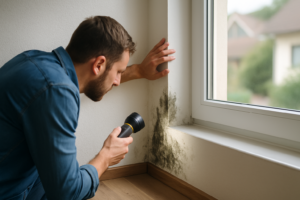
Cladosporium shows up on bathroom ceilings and window frames. It looks like scattered dark speckling. Stachybotrys, the black mold people worry about, needs material that stays wet continuously. That means a slow leak, not just humid air.
Mistake 1: Reaching for Bleach First
Bleach is the default instinct, and on tile or glass it works fine. On drywall, wood, or ceiling tile it does not.
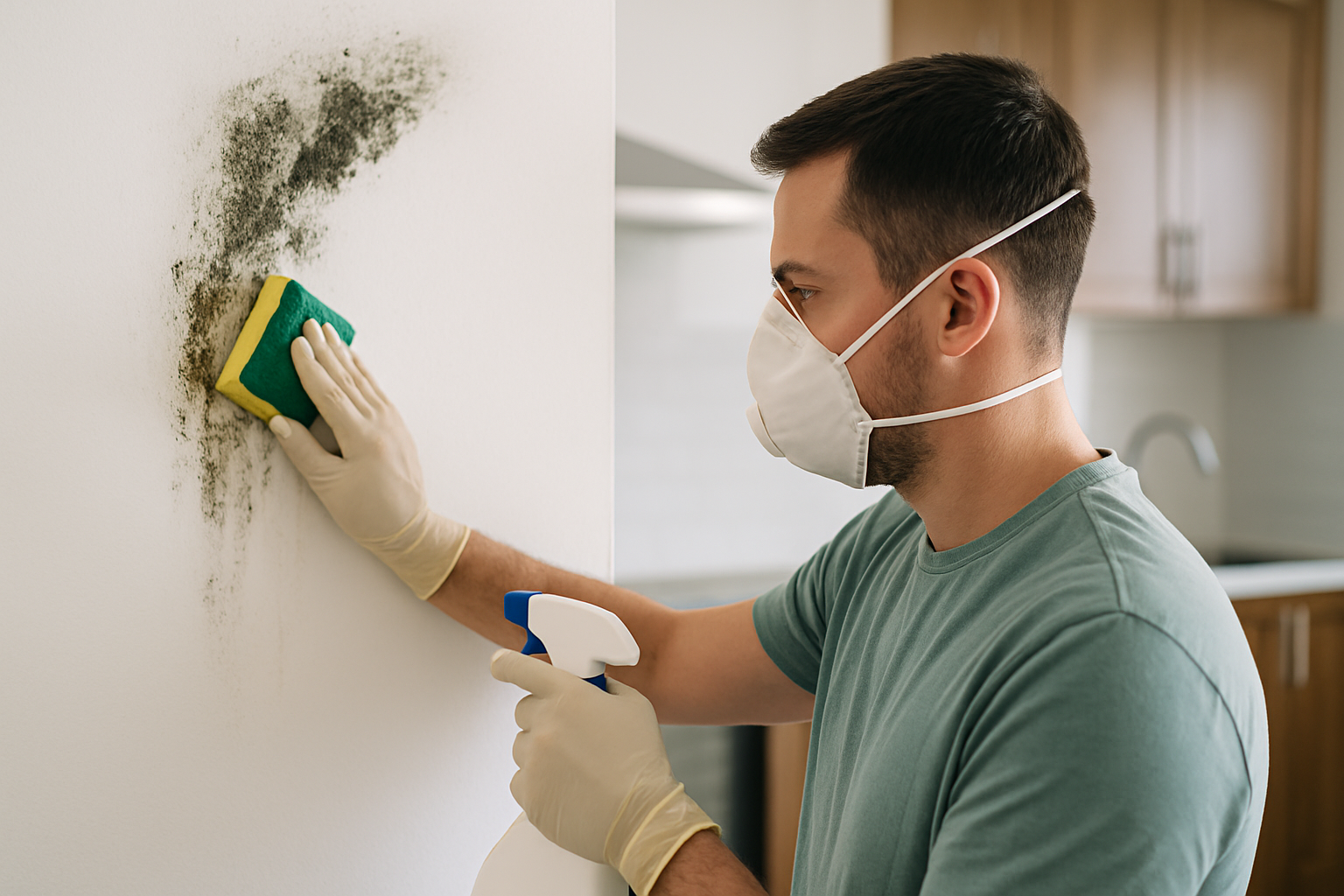
Mold sends root structures into porous material. Bleach is mostly water and it does not penetrate well. The surface color lifts, so the patch looks clean. The roots survive underneath. Worse, you have just added moisture to a material that was already damp.
For hard, non-porous surfaces, detergent and water do the job. The EPA's mold cleanup guidance is direct about this: scrub hard surfaces with detergent and water, then dry completely. Absorbent materials usually need to be thrown out instead.
Mistake 2: Skipping Containment
This is the mistake that turns one bad room into a whole-house problem.
Scrubbing, scraping, and tearing out material sends spores airborne. Without containment they travel on the air current to every room you left open. Homeowners often call Hawaii Water Damage Restoration about a bedroom problem that began in the bathroom weeks earlier.
Containment is not complicated. Close interior doors. Hang plastic sheeting across the opening. Turn off central AC so the system does not pull spores into the ductwork. Wear an N95 or P100 respirator, goggles, and gloves before you start.
Mistake 3: Cleaning the Surface and Stopping There
Paint is not remediation. Neither is a wipe-down.
Mold-blocking primer over a live colony hides it for a few months. The colony keeps feeding on the material behind the paint. When it resurfaces, the repair is larger than it would have been. The same applies to wiping visible growth off a wall while the cavity behind it stays wet.
Porous material that has been colonized does not get cleaned. It gets removed. Moldy ceiling tiles, carpet, insulation, and soft drywall go in a sealed bag and out of the house.
Mistake 4: Leaving the Moisture Source Running
Every successful mold job ends with the moisture fixed. Every failed one skips it.
Here the source is often not dramatic. It is an AC unit dumping condensate into a wall cavity. It is a bathroom fan venting into the attic instead of outside. It is a single-wall room with no insulation, where humid air meets a cool surface and condenses. None of those announce themselves the way a burst pipe does.
Run a dehumidifier and hold indoor humidity between 30% and 50%. Vent dryers and bathroom fans outdoors. Keep interior doors open during Kona stretches so air keeps moving. If you skip this step, you will be cleaning the same wall again next quarter.
Mistake 5: Misjudging How Big the Job Really Is
There is a real line between a DIY job and a professional one, and it is not a judgment call.
Handle it yourself when the patch is under about 10 square feet on a hard surface. The moisture source must already be repaired. Call a professional when any of the following is true:
- The affected area is larger than 10 square feet.
- Mold is growing inside HVAC ducts or air handlers.
- Large sections of drywall, insulation, or carpet are involved.
- Someone in the house has asthma, severe allergies, or a weakened immune system.
That last one matters more than people expect. According to the CDC's guidance on mold, exposure can cause a stuffy nose, sore throat, coughing, wheezing, burning eyes, or skin rash. People with asthma or a mold allergy often react more strongly.
Most of the DIY mold mistakes Waipahu Hawaii homeowners make trace back to this one. The job looked like a Saturday project and turned out to be a containment job.
What Hawaii Law Says About Mold in Rentals
Hawaii has no standalone mold statute. That surprises people. Mold is handled under broader housing law instead.
Under the Hawaii Residential Landlord-Tenant Code, HRS Chapter 521, landlords must keep a rental fit to live in. Severe mold that threatens health violates that warranty. Tenants need to give written notice first. If repairs are not made in a reasonable time, a tenant may repair and deduct up to $500.
Sellers have obligations too. Under HRS Chapter 508D, a seller must disclose known material defects in writing. A history of significant mold counts.
If you rent here, put your notice in writing and keep a copy. Photos with dates help later.
Frequently Asked Questions
1.Can I do mold remediation on my own?
2.What naturally kills mold in the air?
3.Is mold a big problem in Hawaii?
4.Does mold grow back after cleaning?
5.Is bleach or vinegar better for mold?
Before You Reach for the Bleach
The pattern we see across the island is consistent. A homeowner cleans a visible patch, the mold returns in a month, and by then it has moved inside the wall. Catching it at the first stage keeps the work small.
If the patch is bigger than a sheet of paper, get eyes on it before scrubbing. The same goes if you can smell it without seeing it. Hawaii Water Damage Restoration handles mold removal and remediation in Waipahu with containment and moisture mapping, so the repair happens once. Our team can also trace the water source itself through emergency water extraction when a leak is still active.
Knowing the common DIY mold mistakes Waipahu Hawaii homeowners make is most of the battle. The rest is acting before the humidity does it for you.