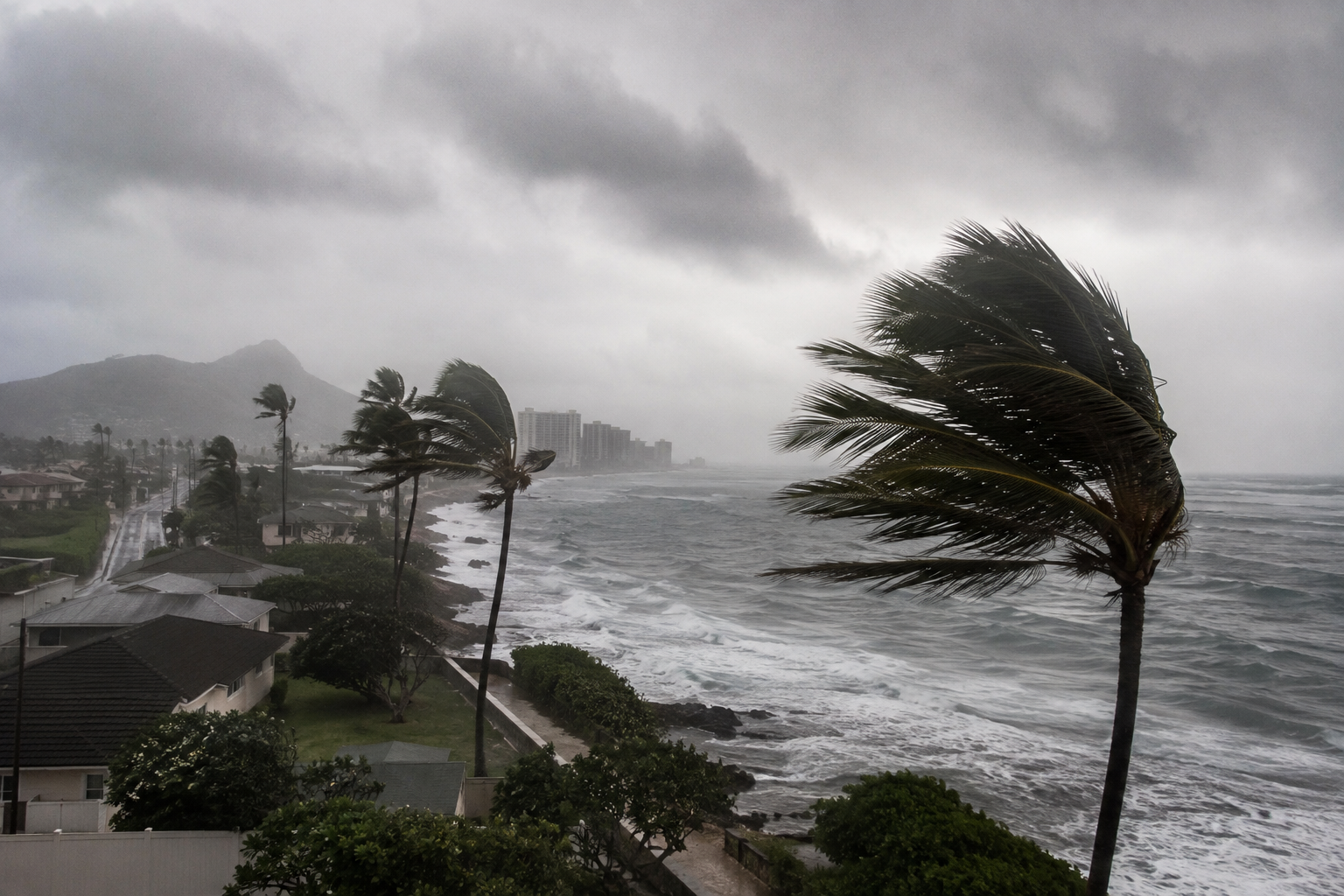
Kona Low in Hawaii: What It Is and How It Can Cause Storm Damage to Your Home
A Kona Low can bring a very different weather pattern to Hawaii than the familiar trade winds. Moisture-rich winds, periods of heavy rain, thunderstorms, flooding, and strong winds can all occur when one of these systems develops near the islands.
For homeowners, the concern is not simply what happens while the storm is overhead. Heavy rain and wind can allow water to enter through roofs, windows, doors, exterior walls, and low-lying areas. Some damage is immediately visible, while moisture can also travel into ceilings, wall cavities, flooring systems, and other building materials where it is much harder to detect.
Understanding what a Kona Low is, what kinds of property damage it can cause, and what to check after the storm can help Hawaii homeowners respond more effectively.
What Is a Kona Low?
A Kona Low is a low-pressure weather system that can develop near the Hawaiian Islands and disrupt Hawaii’s typical trade-wind weather pattern.
The word kona refers to the leeward side of the islands. During normal trade-wind conditions, leeward areas are often relatively sheltered from the moisture carried by prevailing winds. A Kona Low can change that pattern by drawing moist air toward Hawaii from the south or southwest.
Depending on the location and strength of the system, conditions may include:
- Prolonged or heavy rainfall
- Thunderstorms
- Flash flooding
- Strong or gusty winds
- High surf and rough coastal conditions
- Rain reaching areas that are normally drier during trade-wind weather
You may also hear the terms Kona storm and Kona Low used when people describe this type of disruptive weather pattern.
Not every Kona Low produces the same conditions on every island. Rainfall, wind, and flooding can vary considerably depending on where the system forms, how it moves, local terrain, and how much moisture reaches a particular area.
Why Kona Lows Can Bring Severe Weather to Hawaii
Hawaii’s everyday weather is strongly influenced by the trade winds. A Kona Low can replace that familiar pattern with winds and moisture arriving from different directions.
That matters because Hawaii’s mountains and valleys strongly influence where rain falls. Moist air interacting with the terrain can contribute to persistent rainfall in some locations, while other areas may experience very different conditions.
A slow-moving system can also expose the same area to repeated periods of rain. As soil becomes saturated and drainage systems receive more runoff, flooding can become an increasing concern.
Strong winds can create a separate set of problems. Trees, branches, roofing materials, exterior components, and other objects may be damaged or displaced. When wind and rain occur together, water can sometimes enter through openings that remain dry during ordinary rainfall.
For a property owner, the important point is that Kona Low damage can result from several conditions happening at the same time. Wind may affect the exterior of a building while heavy rainfall creates flooding or water intrusion elsewhere.
What Types of Storm Damage Can a Kona Low Cause?
Storm damage from a Kona Low can range from an obvious flooded room to a small roof leak that allows moisture to spread gradually through hidden building materials.
The amount of damage depends on the property, its location, its condition before the storm, drainage around the building, and the specific weather conditions affecting the area.
Roof Leaks and Wind-Driven Rain
Roof damage does not always mean that a large section of roofing has failed.
Water can enter around vulnerable areas such as:
- Flashing
- Roof penetrations
- Vents
- Skylights
- Roof edges
- Previously damaged roofing materials
- Areas affected by wind
Wind-driven rain can behave differently from normal vertical rainfall. Strong winds may push water toward joints, openings, and exterior surfaces that are not usually exposed to rain from that direction.
Inside the home, the first evidence may be a ceiling stain, dripping water, damp insulation, bubbling paint, or discoloration near a wall.
The visible spot is not necessarily the only wet area. Water entering through the roof can travel along framing or other materials before becoming visible inside the living space.
Flooding and Water Intrusion
Heavy rainfall can produce runoff faster than some areas can drain it.
Water may enter a property through:
- Exterior doors
- Garages
- Low openings
- Ground-level walls
- Drainage problem areas
- Flooded exterior spaces
Once water enters a building, porous materials can absorb it quickly. Carpet, padding, drywall, wood components, cabinets, and some types of flooring can hold moisture even after visible standing water has been removed.
This is why removing the water you can see is only one part of the restoration process.
Ceiling, Wall, and Flooring Damage
Storm-related water can spread beyond the point where it entered the building.
A ceiling leak may affect drywall and insulation. Water reaching a wall can move into baseboards, wall cavities, and adjacent flooring. Moisture beneath flooring may extend beyond the visibly wet portion of a room.
Possible signs include:
- Water stains
- Swollen baseboards
- Peeling or bubbling paint
- Soft drywall
- Warped or lifting flooring
- Damp carpet
- Changes in the appearance of wood materials
- Persistent dampness
These signs help identify where further inspection may be needed, but visible damage alone does not show the full moisture pattern.
Hidden Moisture Inside Building Materials
One of the most important issues after storm damage is moisture that cannot be seen from the surface.
Hidden moisture occurs when water reaches areas such as wall cavities, flooring systems, ceilings, insulation, cabinets, or structural materials that are difficult to inspect visually.
A wall, floor, or ceiling surface can begin to look dry while nearby materials still contain excess moisture.
This is particularly important after roof leaks and flooding because water follows pathways through a building. The location where water becomes visible may be different from the location where it originally entered.
Professional restoration therefore involves more than looking for wet surfaces. The affected area may need to be inspected and moisture conditions measured to understand how far water has traveled.
Why Storm Damage May Not Be Obvious Right Away
Some storm damage is impossible to miss. A flooded floor or active ceiling leak creates an immediate problem.
Other damage can be much less obvious.
Imagine rain entering through a small roof opening during a Kona storm. Some water appears as a stain on the ceiling, but another portion moves into insulation and the wall cavity beside it.
After the rain stops, the ceiling surface may stop dripping. The visible symptom has improved, but moisture may still remain inside surrounding materials.
Homeowners should pay attention to changes that appear after the storm, including:
- New ceiling or wall stains
- Damp or soft drywall
- Swollen trim or baseboards
- Flooring that begins to lift or change shape
- Musty odors
- Damp cabinets or closets
- Water appearing around windows or doors
- Unexplained moisture near exterior walls
A lack of standing water does not necessarily mean that every affected material is dry.
What Should You Check Around Your Home After a Kona Storm?
Once conditions are safe, a systematic inspection can help you identify potential problems early. Start with areas most exposed to rainfall and runoff.
1.Look at Ceilings and Upper Walls
Check for new stains, discoloration, bubbling paint, damp spots, or active dripping. Pay particular attention to areas below the roof and around exterior walls.
2.Check Windows and Exterior Doors
Look for moisture around frames, sills, trim, and nearby flooring. Wind-driven rain may reach openings differently than ordinary rainfall.
3.Inspect Floors and Baseboards
Notice wet carpet, swollen baseboards, lifting flooring, or dampness near exterior walls. Moisture can sometimes extend beneath the visible surface.
4.Check Closets and Cabinets
Water can spread into enclosed areas that are easy to overlook, particularly near exterior walls, plumbing penetrations, and wet flooring.
5.Look at Areas Where Water Could Enter From Outside
Garages, ground-level entrances, patios, lanais, and lower portions of the property may show signs of runoff or flooding.
6.Pay Attention to Odors and Persistent Dampness
A damp or musty odor after a storm can indicate that an area needs closer inspection, especially when there is no obvious visible water.
7.Document Visible Damage
Photos and notes can help create a record of what you observed, where the damage appeared, and how conditions changed after the storm.
Safety comes first. Do not enter areas that are structurally unsafe, exposed to electrical hazards, or still affected by dangerous storm conditions.
What Should You Do If You Find Water or Storm Damage?
If water has entered your home, focus first on safety and preventing additional water from reaching the affected area when that can be done safely.
Then determine whether the problem is limited to a small, accessible surface or whether water may have entered building materials.
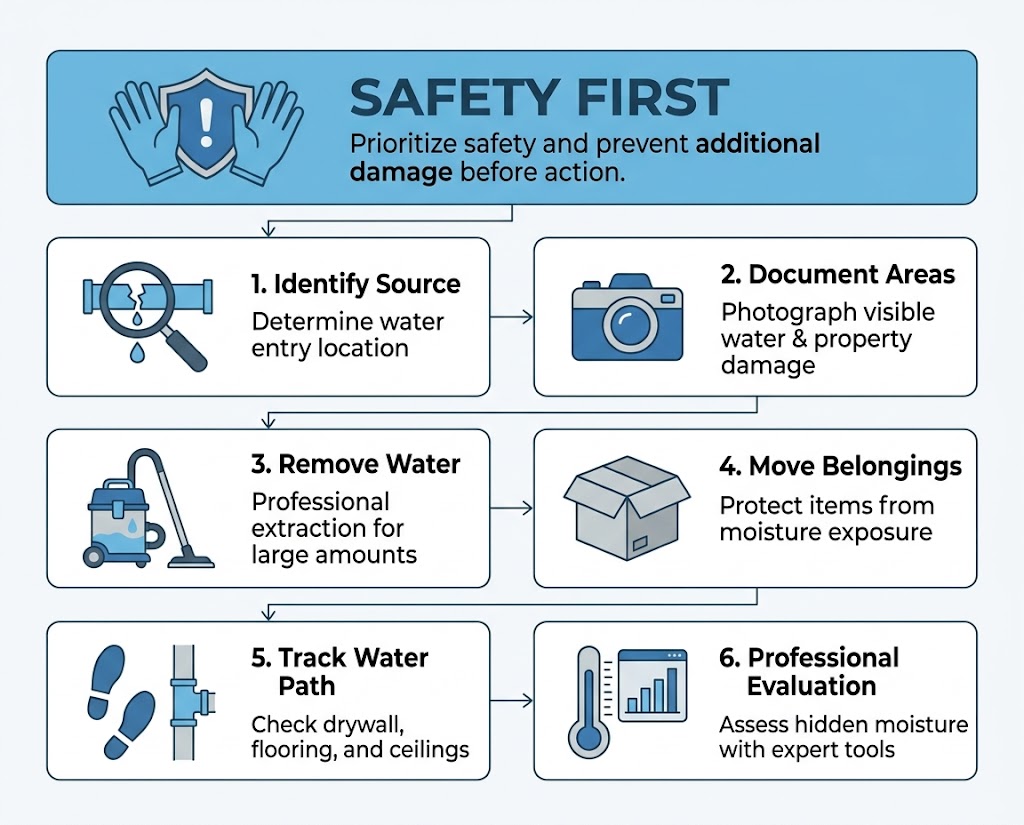
1.Identify the apparent source of water. Determine whether water is still entering through the roof, exterior, plumbing, or another location.
2.Document the affected areas. Photograph visible water and property damage before significant cleanup when it is safe to do so.
3.Remove standing water when appropriate. Large amounts of water or widespread flooding may require professional extraction.
4.Move unaffected belongings away from wet areas when possible. This can help protect contents from additional moisture exposure.
5.Consider where water may have traveled. Wet drywall, flooring, cabinets, ceilings, and insulation may require more than surface drying.
6.Have significant or hidden moisture evaluated. Professional moisture inspection can help determine the extent of the affected area.
Drying should address the materials that actually became wet, not just the water visible on the surface.
How Professional Storm Damage Restoration Works
Storm damage restoration is the process of identifying, mitigating, drying, cleaning, and restoring property affected by weather-related damage.
The exact response depends on what happened to the building. A roof leak affecting one room requires a different plan from widespread flooding across multiple areas.
At Hawaii Water Damage Restoration, the restoration process follows a progression from inspection and mitigation through drying, cleaning, and repairs.
Inspection and Moisture Detection
The first step is understanding what happened.
The affected areas are inspected to identify visible damage and determine where moisture may have traveled.
This matters because the source of water and the visible damage do not always line up. Water from a roof leak, for example, may move through insulation or framing before appearing on a ceiling or wall.
Moisture measurements can help establish which materials are affected and provide information for the drying plan.
Water Extraction
When standing water is present, extraction removes as much excess water as practical before structural drying begins.
Extraction is important because physically removing water is generally more efficient than relying on evaporation alone.
Depending on the situation, affected contents or materials may also need to be moved or addressed so the wet areas can be properly evaluated.
Structural Drying and Dehumidification
Structural drying is the controlled process of removing excess moisture from building materials and the surrounding environment.
After extraction, drying may involve air movement and dehumidification to encourage moisture to leave wet materials while controlling moisture in the air.
The goal is not simply to make the room feel dry.
Technicians can monitor moisture conditions to evaluate whether affected building materials are actually progressing toward appropriate drying conditions.
This distinction is especially important when moisture has entered drywall, flooring, framing, or other materials that do not reveal their internal moisture simply by looking at the surface.
Cleaning, Repairs, and Restoration
Storm damage can involve more than water removal.
Depending on the event and affected materials, the restoration process may also include:
- Cleaning affected areas
- Addressing contaminants when present
- Odor control
- Removal of materials that cannot appropriately remain
- Structural or cosmetic repairs
- Reconstruction
- Final evaluation of the restored areas
The purpose is to move from damage mitigation to a usable, restored property rather than stopping when visible water disappears.
Why Hawaii’s Humidity Can Complicate Drying After a Storm
Hawaii’s humid environment matters when drying a water-damaged building.
Drying depends on moisture moving out of wet materials and into an environment where that moisture can be managed. When outdoor air already contains significant moisture, simply opening windows or relying on natural ventilation may not always create effective drying conditions.
This does not mean every small wet area requires professional equipment.
It does mean homeowners should avoid assuming that a room is fully dry simply because surfaces no longer look wet.
Materials behave differently after water exposure. Drywall, wood, carpet, insulation, flooring systems, and cabinets can absorb and release moisture differently.
Professional structural drying uses controlled conditions and moisture monitoring to evaluate drying progress rather than relying only on appearance or touch.
That becomes particularly relevant after a Kona storm, when several areas of a home may have been exposed to moisture at the same time.
When Should You Call a Storm Damage Restoration Company?
Professional evaluation becomes more useful when the extent of the water damage is uncertain or when moisture may have entered building materials.
Consider contacting a storm damage restoration company when:
- Water has entered multiple rooms
- There is significant standing water
- A roof leak has affected ceilings or walls
- Flooring or drywall is visibly saturated
- Water may be trapped beneath flooring
- You suspect moisture inside walls or ceilings
- The affected area is not drying as expected
- Materials remain damp after visible water has been removed
- The property has experienced significant flooding
- You are unsure how far the water traveled
The decision is less about whether the original leak looked dramatic and more about where the water went after it entered the property.
A relatively small opening can still introduce moisture into an area that is difficult to inspect or dry without the right equipment.
Hawaii Water Damage Restoration provides storm damage restoration along with water extraction, structural drying, dehumidification, cleaning, repairs, and related restoration services. An inspection can help identify the affected areas and determine the appropriate next steps.
How to Prepare Your Property Before the Next Kona Storm
No property can be made completely storm-proof, but routine maintenance can reduce avoidable vulnerabilities.
Before periods of severe weather, consider checking:
- Roof condition and known leak areas
- Gutters and drainage paths
- Windows and exterior door seals
- Exterior openings and penetrations
- Trees or branches near the structure
- Ground drainage around the property
- Areas that have flooded during previous storms
- Accessible exterior items that could move in strong winds
Inside the property, knowing where previous leaks have occurred can also help. Areas with a history of water intrusion deserve extra attention when heavy rainfall returns.
Property managers and condominium associations may also benefit from having a clear reporting process so leaks and water intrusion in individual units or common areas are identified quickly.
Preparation does not eliminate storm risk. It makes it easier to identify problems and respond when conditions change.
Frequently Asked Questions About Kona Lows and Storm Damage
Understanding the Damage Is the First Step Toward Restoration
A Kona Low can expose a Hawaii property to a combination of heavy rain, flooding, strong winds, and water intrusion. But the end of the storm does not necessarily mean the end of the moisture problem.
The most important question after water enters a building is not simply “Is the water gone?”
It is “Where did the water travel, and which materials are still wet?”
Checking ceilings, walls, flooring, windows, doors, and other vulnerable areas can help identify obvious damage. When the extent of the moisture is unclear, a professional inspection can help identify hidden affected areas and establish the appropriate drying and restoration plan.
If your home or property has been affected by a Kona storm, Hawaii Water Damage Restoration can inspect the damage, help identify moisture, and guide you through the next steps in the restoration process.