Water Damage in Hawaii: Why High Humidity Makes Proper Drying So Important
Water damage does not end when the standing water disappears. Moisture can remain inside drywall, flooring, cabinets, insulation, wall cavities, and other building materials long after a surface appears dry.
In Hawaii, outdoor humidity adds another factor to the drying process. When the surrounding air already contains significant moisture, simply opening windows or pointing household fans at a wet area may not create effective drying conditions.
Proper water damage restoration therefore involves more than removing visible water. The affected structure needs to be evaluated, moisture needs to be located, and drying conditions need to be controlled and monitored until materials reach an appropriate dry condition.
For Hawaii homeowners, understanding this difference can help prevent a relatively contained water loss from becoming a more complicated restoration project.
Does Hawaii’s Humidity Make Water Damage Harder to Dry?
Yes. High outdoor humidity can make water-damaged materials more difficult to dry because the moisture inside those materials needs to evaporate into the surrounding air before it can be removed from the environment.
When the surrounding air is already humid, uncontrolled natural ventilation may be less effective at supporting evaporation.
That does not mean every water-damaged property in Hawaii will dry slowly. Drying conditions depend on several factors, including:
- The amount of water
- How long materials were exposed
- The type of materials affected
- Indoor and outdoor humidity
- Temperature
- Air movement
- How quickly standing water was extracted
- Whether moisture has reached concealed spaces
- Building construction
- Accessibility of wet materials
The important point is that drying should be based on actual moisture conditions, not assumptions about how long a room “should” take to dry.
What Happens to Moisture After a Leak or Flood?
Water rarely stays exactly where it first appears.
A leaking refrigerator, for example, may release water that travels beneath flooring and cabinets. A roof leak may follow framing before a ceiling stain becomes visible. Water from an upstairs condominium can move through wall or plumbing cavities before appearing in the unit below.
Porous and absorbent building materials can also retain moisture after standing water has been removed.
Depending on the situation, moisture may affect:
- Drywall
- Insulation
- Wood framing
- Hardwood flooring
- Carpet and padding
- Cabinets
- Baseboards
- Subflooring
- Ceilings
- Concrete or masonry
This is why water extraction and structural drying are different stages of restoration.
Extraction removes bulk or standing water. Structural drying addresses moisture that remains in materials and in the surrounding air.
How Can You Tell If Your Home Is Still Wet?
You cannot always tell by looking at or touching a surface.
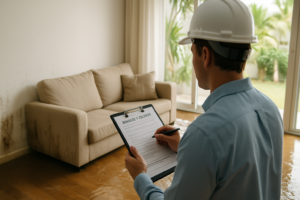
Professional water damage inspection may include moisture-meter readings, relative-humidity readings, temperature measurements, thermal imaging, and targeted inspection of areas where water may have traveled.
The objective is to understand the actual boundaries of the water damage rather than relying only on what is visible.
Visible Signs of Lingering Moisture
Possible signs of unresolved water damage include:
- Water stains on walls or ceilings
- Bubbling or peeling paint
- Swollen baseboards
- Warped flooring
- Loose floor tiles
- Soft drywall
- Sagging ceilings
- Damp cabinets
- Musty odors
- Unusual condensation
- Discoloration around windows
- Increased indoor humidity
- Visible mold growth
These signs can indicate a moisture problem, but their absence does not prove that the structure is dry.
Hidden Moisture You Cannot See or Feel
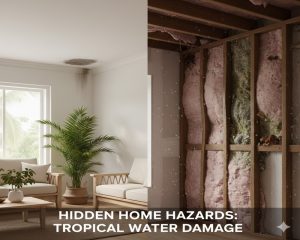
One of the most important concepts in water damage restoration is that a surface can feel dry while moisture remains underneath or behind it.
Water may be concealed:
- Behind drywall
- Inside wall cavities
- Beneath flooring
- Under cabinets
- Around plumbing penetrations
- Inside insulation
- Within ceiling assemblies
For example, the exposed surface of a floor may appear normal while the subfloor or surrounding materials still contain elevated moisture.
That is why professional measurements provide more useful information than touch alone.
Should You Open the Windows to Help Dry Water Damage?
It depends on the outdoor conditions.
Opening windows can sometimes support drying when outside air is drier than the indoor environment. In Hawaii, however, outdoor air may already contain enough moisture that bringing more of it indoors does not improve drying conditions.
In some circumstances, uncontrolled ventilation can work against the drying process.
Professional structural drying takes a different approach. Instead of assuming outside air will help, technicians can evaluate temperature and relative humidity and create more controlled indoor conditions.
This distinction is especially important in Hawaii, where high outdoor humidity is a recurring environmental factor.
Opening windows is therefore not automatically wrong, but it should not be treated as a substitute for moisture assessment and controlled drying after significant water damage.
Are Fans Enough to Dry a Water-Damaged Room?
Not necessarily.
Air movement is an important part of structural drying, but moving air is only one part of the process.
Professional air movers create controlled airflow across wet surfaces, helping moisture move from materials into the air. Once that water becomes vapor, however, it still needs to be removed from the environment.
That is where dehumidification becomes important.
Dehumidifiers remove water vapor from the air, helping create conditions that allow additional moisture to leave wet materials.
In simplified terms:
- Water extraction removes bulk water.
- Air movement helps moisture evaporate from wet materials.
- Dehumidification removes moisture from the air.
- Temperature and humidity are monitored.
- Moisture readings are used to track the condition of affected materials.
Using household fans without considering humidity, hidden moisture, or dehumidification may leave part of the problem unresolved.
When Is Professional Structural Drying Needed?
A very small clean-water spill on a nonporous surface may sometimes be manageable without a full restoration project.
Professional evaluation becomes more important when water has moved into absorbent building materials or when the true extent of the moisture is uncertain.
Consider professional help when:
- Water affects multiple rooms
- Drywall or insulation is wet
- Carpet or padding is saturated
- Hardwood flooring is affected
- Water has traveled through a ceiling
- Cabinets or wall cavities may be wet
- The source is contaminated
- Water has been present for an extended period
- The extent of hidden moisture is unknown
- The property is a condominium or commercial building
Professional drying is not simply about bringing equipment into a room. The drying plan should be based on what is wet, where the moisture traveled, what materials are affected, and how those materials respond during drying.
How Restoration Professionals Control Moisture and Humidity
A structured drying process begins with understanding the loss.
Technicians may inspect the property using visual examination, moisture meters, relative-humidity measurements, temperature measurements, thermal imaging, and targeted inspection of flooring, walls, cabinets, ceilings, and other potentially affected areas.
The resulting moisture map helps determine where drying is needed.
Water Extraction
Removing standing water as quickly as conditions safely allow is an important first step.
Bulk water extraction can reduce the amount of moisture that must later evaporate from the structure. It can also help limit migration into surrounding materials and reduce the amount of water vapor being released into the indoor environment.
Controlled Air Movement
Air movers are positioned to create airflow across wet surfaces.
The goal is not simply to make a room windy. Equipment placement should support evaporation from the materials that actually need to be dried.
Dehumidification
As moisture evaporates from drywall, wood, flooring, and other materials, it enters the air as water vapor.
Dehumidifiers remove that moisture from the air.
This step is particularly relevant in Hawaii because relying on naturally humid outside air may not provide suitable drying conditions.
Moisture Monitoring
Drying conditions can change as the project progresses.
Technicians may monitor:
- Material moisture levels
- Relative humidity
- Temperature
- Areas of known or suspected hidden moisture
Specialty drying systems may also be used for difficult areas such as hardwood flooring, wall cavities, cabinets, ceilings, concrete, masonry, or other materials that require targeted drying.
How Do You Know When the Drying Process Is Complete?
The equipment should not be removed simply because the room looks dry or surfaces no longer feel wet.
Drying completion should be supported by measurements.
Moisture meters can help technicians determine whether affected materials are returning to an appropriate dry condition. Measurements may be compared with suitable dry standards or unaffected materials in the property.
This matters because visible improvement can occur before moisture inside the structure has been adequately addressed.
There is also no universal drying timeline.
Drying time varies according to the amount of water, exposure time, materials, temperature, relative humidity, airflow, accessibility, weather conditions, building construction, and other characteristics of the loss.
A smaller water loss and a large multi-room event should not be expected to follow the same timeline.
What Should You Do First After Discovering Water Damage?
The first priority is safety and stopping additional water intrusion when it can be done safely.
Depending on the situation, homeowners or property managers may be able to:
- Shut off the water source.
- Keep people and pets away from unsafe areas.
- Move dry belongings away from the affected area.
- Photograph visible damage.
- Contact building management when the property is a condominium or multifamily building.
- Notify the appropriate insurance provider.
- Arrange an assessment when water has entered building materials or hidden moisture may be present.
Do not enter standing water when electrical hazards may be present, use a standard household vacuum to collect water, handle sewage or floodwater without appropriate protection, or assume that a structure is dry simply because the visible water is gone.
The sooner the extent of the moisture is understood, the sooner an appropriate drying plan can begin.
Frequently Asked Questions
Does opening windows help dry water damage in Hawaii?
Sometimes. Opening windows may help when outside air is drier than the indoor environment. When outdoor humidity is high, however, bringing humid air inside may make uncontrolled ventilation less effective. Controlled dehumidification can provide more reliable drying conditions.
How long should dehumidifiers run after water damage?
There is no universal number of hours or days. Dehumidifiers should remain part of the drying process until moisture measurements indicate that affected materials have reached an appropriate dry condition. The required time varies according to the materials, humidity, temperature, extent of damage, and other site conditions.
Can a wall feel dry and still contain moisture?
Yes. Moisture can remain behind drywall, inside wall cavities, in insulation, or in other concealed materials even when the exposed surface feels dry. Moisture meters and other inspection methods can help identify these conditions.
Does every water leak require mold remediation?
No. Mold remediation is not automatically necessary after every leak. Prompt water extraction and effective drying may help prevent conditions that support mold growth. Remediation may become necessary when mold is visible, suspected, or identified in affected materials.
Can wet drywall always be dried?
No. Whether drywall can remain depends on factors such as the water source, contamination, saturation, exposure time, material condition, and whether it can be completely dried. Damaged, contaminated, deteriorated, or mold-affected drywall may require removal.
Why is moisture monitoring important during water damage restoration?
Monitoring helps determine whether the drying process is actually working. Instead of relying on appearance or touch, technicians can track moisture in affected materials along with temperature and relative humidity and adjust the drying process when necessary.
Proper Drying Matters in Hawaii’s Climate
Water damage restoration is not complete when the puddles are gone.
In Hawaii’s humid environment, successful drying requires understanding where the water traveled, removing bulk water, creating controlled airflow, reducing moisture in the air, and verifying progress with appropriate measurements.
This is especially important when water has reached drywall, flooring, cabinets, insulation, wall cavities, or other materials that can remain wet after exposed surfaces appear dry.
Hawaii Water Damage Restoration assists properties affected by burst pipes, appliance leaks, roof leaks, flooding, sewage backups, wet drywall, damaged flooring, hidden moisture, mold growth, and storm-related water intrusion.
Depending on the conditions, the restoration process may include emergency assessment, water extraction, moisture mapping, structural drying, dehumidification, cleaning, mold remediation, material removal, and reconstruction.
If water is actively entering a property or significant hidden moisture is suspected, addressing the source and evaluating the affected materials promptly can help limit additional damage.