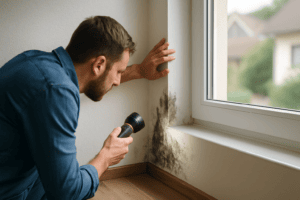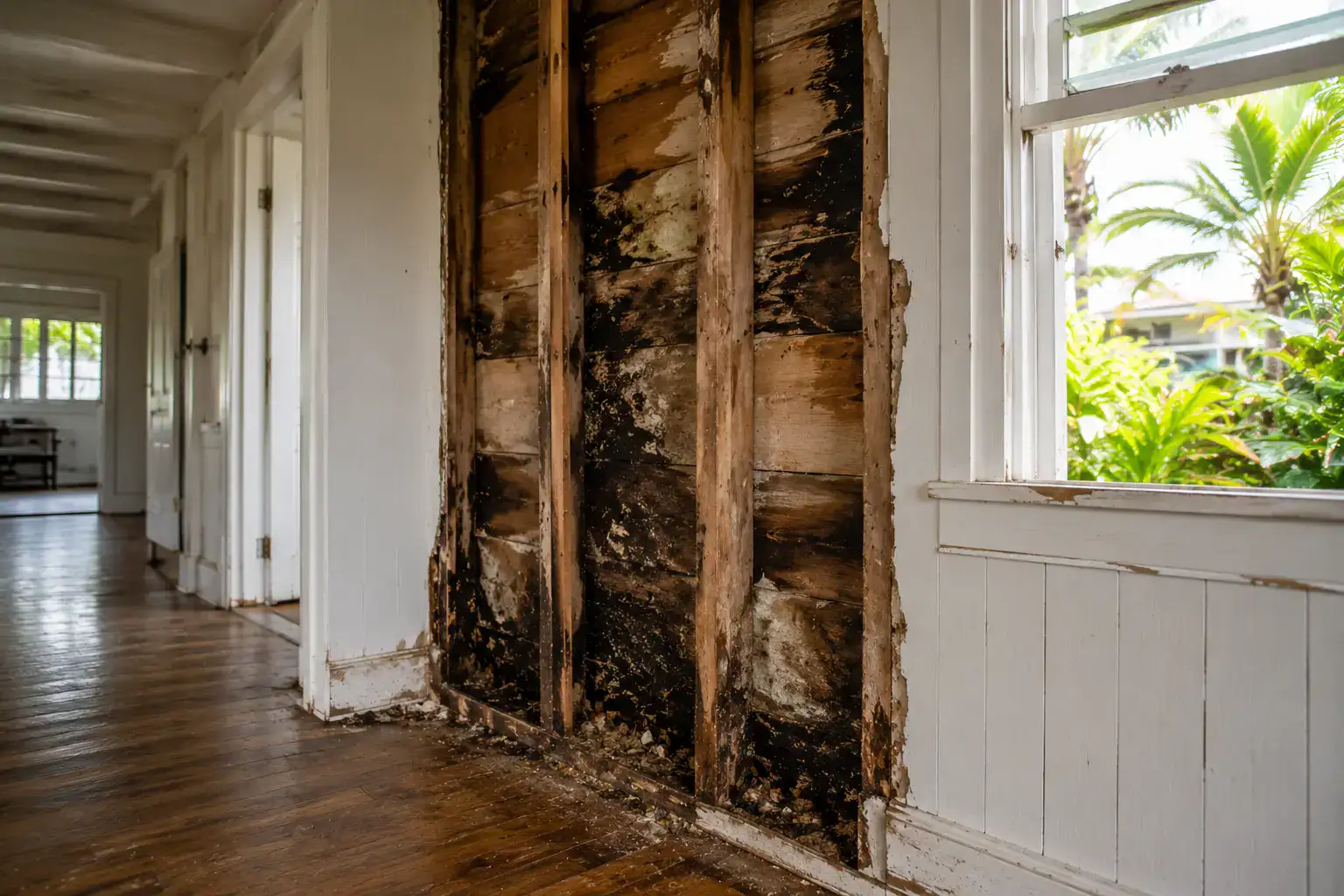
That faint musty smell in the back bedroom is easy to ignore. In an older Honolulu home, it is often the first clue of hidden water damage. Many of Oahu’s classic houses use single-wall construction, which traps moisture in ways modern homes do not. By the time a stain appears, the problem is usually well underway.
Key Takeaways
- ›Older Honolulu homes often hide water damage inside walls and under floors.
- ›Single-wall construction and high humidity let moisture spread before you see it.
- ›A musty smell, soft wood, or warped trim are early warning signs to act on.
Why Older Homes on Oahu Are Different
Many homes built across older Honolulu neighborhoods use single-wall construction. The exterior board is also the interior wall, with no cavity between. That design reacts to moisture differently than a modern framed wall.
Single-Wall Construction and Moisture
Without a wall cavity, water travels along the wood itself. A small roof or plumbing leak can wick across boards quietly. The damage spreads behind paint long before a stain shows.
Post-and-Pier Floors
Many older Oahu homes sit on post-and-pier foundations. The crawl space underneath stays humid and poorly ventilated. That trapped moisture rises into subfloors and feeds rot over time.
How Hawaii’s Humidity Hides the Problem
Oahu’s year-round humidity keeps materials damp longer than mainland climates. A wet board on the mainland might dry on its own. In Honolulu, that same board can stay moist for weeks.
The EPA notes that controlling moisture is the key to controlling mold, as explained in its guide to mold and moisture. In a humid home, hidden water becomes a mold problem fast.
The Mold Connection
Trapped moisture in walls and floors is an open invitation for mold. The CDC links damp indoor spaces to respiratory irritation, as covered in its mold information. Hidden water damage and hidden mold usually travel together.
Early Warning Signs to Watch For
You can catch hidden damage early if you know the signs. None of these prove a problem alone, but together they signal trouble. Trust your nose and your hands as much as your eyes.
What You Can Smell and Feel
A persistent musty smell often appears before any visible stain. Press on baseboards and trim, and note any spots that feel soft. Older damage tends to smell musty and feel spongy.
What You Can See
Look for bubbling paint, faint brown rings, or darkened baseboards. Watch for doors and windows that suddenly stick. Uneven or springy floors can point to subfloor rot below.
Why a Professional Inspection Pays Off
Surface clues only hint at what is happening inside the structure. A professional uses moisture meters and thermal imaging to find hidden water. That turns guesswork into a clear map of the damage.
Hawaii Water Damage Restoration inspects older Honolulu homes for the moisture that single-wall construction hides. We trace the source, measure the spread, and dry to a verified standard. Our mold removal and remediation team handles what hidden water leaves behind.
If the damage reaches framing or floors, our water and flood damage crew restores the structure. We treat the cause, not just the stain you can see.
How Pros Find Hidden Leaks in an Older Home
Hidden leaks need the right tools to find. A visual check is only the start.
Pros use moisture meters to read damp spots. Thermal cameras reveal cool, wet areas behind surfaces. They also inspect baseboards, corners, and under sinks. A spike in the water bill can flag an unseen leak.
Early Signs of Water Damage in Walls and Ceilings
Walls and ceilings show damage first. Watch them closely in an older home.
Look for discoloration and brown stains. Peeling paint or bubbling wallpaper is a tell-tale sign. A soft or warped spot means moisture inside. Sagging drywall points to a larger leak.
What Water Damage Looks Like on Wood
Wood reacts to water in clear ways. In a single-wall home, the wood is the wall.
It softens, warps, and darkens over time. Trim and flooring may feel spongy underfoot. Dark staining often appears along the grain. Press on a suspect board to check.
Is the Water Damage Old or New?
Telling old from new damage matters. The age affects both the repair and the cause.
Older damage smells musty and feels soft. It often shows mold and set-in staining. Fresh damage looks wet and may still spread. A pro reads the moisture to tell which it is.
Frequently Asked Questions
1.Can you have water damage but no mold?
2.How long does it take to notice water damage?
3.How do I tell if my older home has water damage?
4.Does single-wall construction make water damage worse?
5.How do plumbers find hidden leaks?
6.Is hidden water damage permanent?
Catch It Before the Stain Appears
In an older Honolulu home, the damage you cannot see is the one that costs the most. A musty smell today can mean rotted framing next year. If something feels off in your Oahu home, reach out to Hawaii Water Damage Restoration for a moisture inspection.